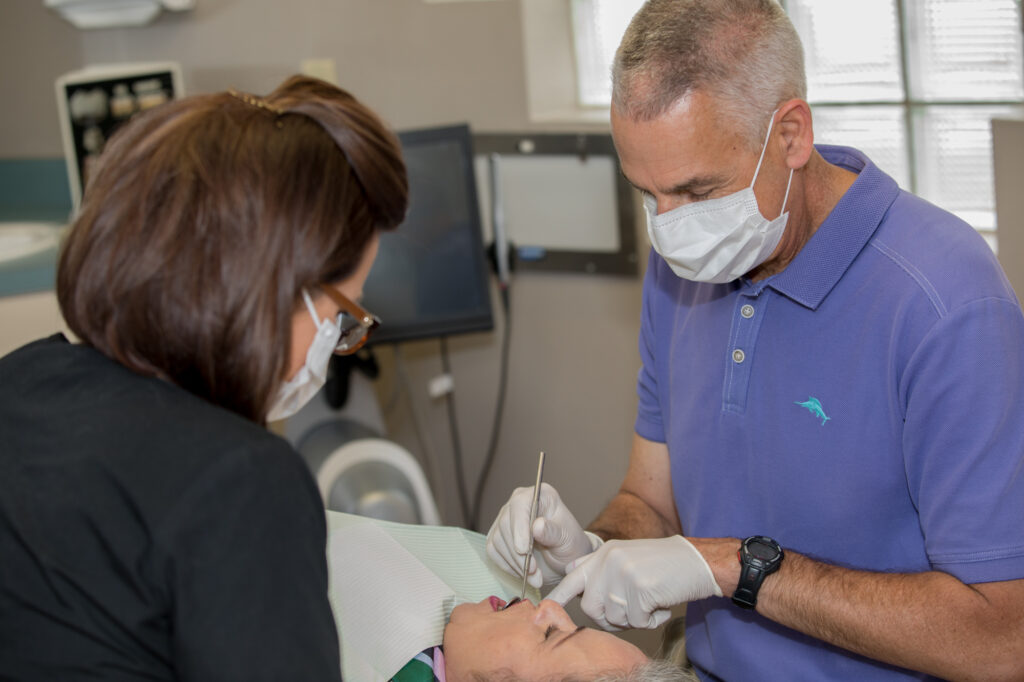
The front desk reception are always very kind and very caring. And thank you Dr. Burch you are the best dentist I’ve ever had. Thank you guys for all you do!
Dry needling in dentistry uses thin, solid needles inserted into tight muscle trigger points in the head, neck, and jaw to relieve pain and dysfunction, particularly for Temporomandibular Joint (TMJ) disorders, myofascial pain, and headaches by causing a twitch response that relaxes muscles and improves blood flow. Dry Needling is a complementary, non-drug treatment for conditions linked to muscular tension.
How it works
- Trigger Point Release: A sterile filament needle is inserted into a tight band or “knot” (trigger point) in the muscle, causing a local twitch response (LTR).
- Muscle Relaxation: The LTR helps to release the shortened muscle fibers, reducing tension and pain.
- Biochemical Changes: It stimulates localized inflammation and can improve blood flow, promoting healing and resetting the neuromuscular junction.
- Deeper Access: Allows treatment of deep tissues not easily reached by manual therapy.
Common dental applications
- TMJ Disorders (TMD): Relieves jaw pain, stiffness, and limited movement.
- Myofascial Pain: Addresses pain in facial and neck muscles.
- Headaches & Migraines: Reduces intensity and frequency of tension-type headaches linked to craniofacial muscles.
- Overactive Gag Reflex: Can help desensitize the reflex.
Key points
- Not Acupuncture: It’s based on anatomy and physiology, not traditional Chinese medicine meridians, though it uses similar needles.
- Sensation: Patients may feel a dull ache or a cramp-like sensation (the twitch) but often don’t feel the needle itself.
- Safety: Uses sterile, single-use needles, with potential mild soreness as a side effect.